
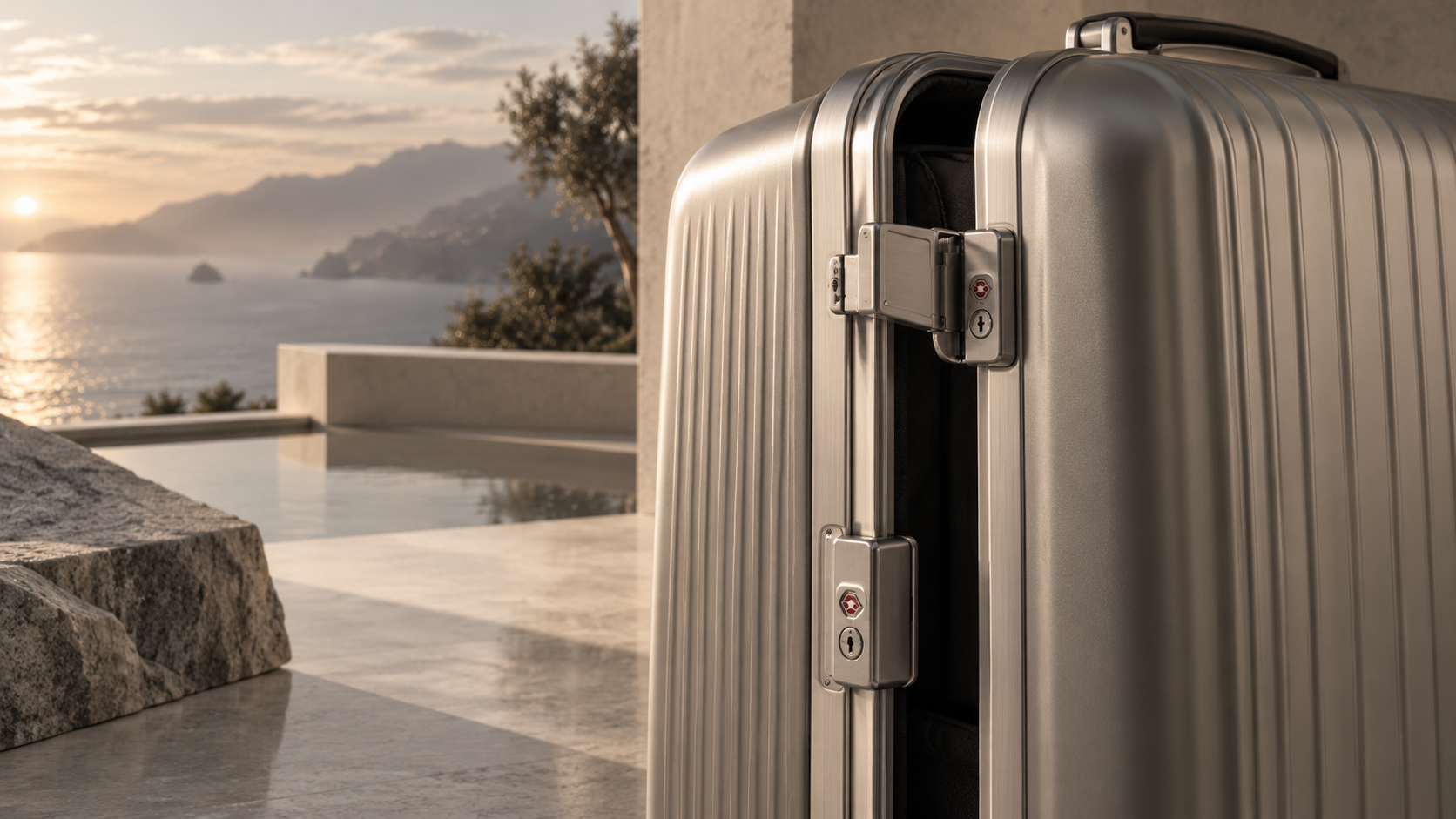
Zipperless luggage replaces the conventional fabric zipper around a suitcase with a structured frame and locking system. Instead of pulling a zipper around the edge of the case, the two halves of the suitcase meet within a rigid frame and are secured using integrated latches or locks.
This construction gives zipperless luggage a distinctive appearance and a more structured feel, but the absence of a zipper is only one part of the design. The frame, shell material, locking hardware, hinges, wheels and overall build quality all influence how the suitcase performs in real travel.
For travelers comparing modern hard-shell luggage, the important question is not simply whether a zipperless suitcase looks more premium. It is whether the closure system suits the way you travel.
What Is Zipperless Luggage?
Zipperless luggage is a suitcase that closes without using the long fabric zipper commonly found around the perimeter of hard-shell luggage.
The shell halves instead meet along a rigid frame. Integrated latches or locks hold the case closed once the two sides are aligned.
This type of construction is particularly common in aluminum and aluminum-frame luggage, although zipperless systems can also appear on polycarbonate cases that use a reinforced frame.
The result is a suitcase with a more defined structure around its opening and closure.
Zipperless vs Zippered Luggage at a Glance
| Factor | Zipperless Luggage | Zippered Luggage |
|---|---|---|
| Closure | Frame with integrated locks or latches | Fabric zipper around case perimeter |
| Structure | Generally more rigid around opening | More flexible around closure |
| Opening method | Unlock latches and separate shell halves | Pull zipper around suitcase edge |
| Appearance | Structured and engineered | Conventional hard-shell design |
| Expansion | Usually fixed-volume | Some designs may include expansion |
| Typical use | Rigid frame-based luggage | Broad range of luggage types |
How Does Zipperless Luggage Close?
A zipperless suitcase normally uses a frame running around the edge of the shell.
When the case is closed, the two shell halves align within this frame. One or more latches then secure the suitcase.
Many designs integrate TSA-compatible locks into those latches, although the exact locking system varies by model.
The important distinction is that the closure does not depend on a continuous zipper track.
This gives the perimeter of the suitcase a more rigid structure and contributes to the engineered appearance associated with zipperless luggage.
Is Zipperless Luggage More Secure?
Zipperless luggage can offer a more structured closure than a conventional zipper-based case, particularly when it uses a rigid frame and integrated locks.
However, security should not be judged from the absence of a zipper alone.
The strength of the locks, frame, hinges and shell all matter. A poorly constructed frame-based suitcase is not automatically more secure than a well-built zippered case.
It is therefore better to evaluate the entire closure system rather than treating “zipperless” as a guarantee of security.
Why Do Some Travelers Prefer Zipperless Luggage?
There are several reasons travelers may prefer a zipperless suitcase.
A More Structured Closure
The rigid perimeter frame helps the suitcase retain a defined shape around its opening.
Integrated Locking Hardware
The locks are typically built directly into the suitcase frame rather than attached to zipper pulls.
Distinctive Design
A frame-based closure creates a cleaner, more architectural appearance that appeals to travelers who prefer structured luggage.
No Perimeter Zipper
Some travelers simply prefer not to rely on a fabric zipper as the main closure mechanism for their suitcase.
What Are the Downsides of Zipperless Luggage?
Zipperless luggage also comes with trade-offs.
Less Flexibility Around the Opening
A rigid frame does not stretch in the same way that a zipper-based closure can.
This means the suitcase needs to close cleanly without excessive pressure from overpacking.
Usually No Expansion System
Many zipperless cases have a fixed volume and do not include the expandable zipper sections found on some conventional luggage.
Frame Alignment Matters
The two halves need to align properly before the latches can close. If the suitcase is overpacked, closing a rigid frame can become more difficult.
Potentially More Weight
Depending on the materials used, the reinforced frame and hardware can contribute additional weight compared with a lighter zipper-based case.
Is Zipperless Luggage Better for Aluminum Suitcases?
Zipperless construction pairs naturally with aluminum luggage because both emphasize rigidity and structure.
An aluminum shell already resists flexing more than many molded polymer shells, so a rigid perimeter frame complements the material’s overall behavior.
This is why many premium aluminum suitcases use frame-and-latch closures rather than conventional zippers.
You can compare current options in the RAVONA Aluminum Luggage Collection.
For cabin travel, the RAVONA 20 Inch All Aluminum Zipperless Carry-On Suitcase is one example of this combination of metal construction and frame-based closure.
Can Polycarbonate Luggage Be Zipperless?
Yes. Zipperless construction is not limited to aluminum shells.
A polycarbonate suitcase can use a reinforced frame instead of a conventional zipper, giving the case a structured closure while retaining the lighter and more flexible characteristics associated with polycarbonate.
The RAVONA Zipperless Polycarbonate Suitcase with Leather Handle demonstrates how a zipperless closure can be combined with a polycarbonate shell.
Is Zipperless Luggage Waterproof?
Zipperless does not automatically mean waterproof.
A rigid frame may reduce some of the exposed fabric elements found in zipper-based luggage, but water resistance depends on the design of the frame, seals, joints, locks and shell.
Unless a manufacturer specifically provides a verified waterproof or water-resistance rating, travelers should not assume that a zipperless suitcase is waterproof.
As with any luggage, important moisture-sensitive items should be packed appropriately for the expected travel conditions.
Is Zipperless Luggage Easier to Open?
For many travelers, yes.
Instead of moving a zipper around the entire perimeter of the suitcase, you typically release the integrated locks or latches and open the two shell halves.
This can feel quicker and more deliberate, particularly when the case is positioned flat.
However, a rigid-frame suitcase needs to be correctly aligned when closing. Overpacking can make that alignment less convenient.
Does Zipperless Luggage Prevent Overpacking?
In a practical sense, it can encourage more disciplined packing.
A zipper-based case may allow a small amount of flexibility around the perimeter, and expandable luggage can provide even more room.
A rigid zipperless frame has a more clearly defined closing position.
If the contents prevent the two halves from meeting correctly, the suitcase should be repacked rather than forced shut.
This can be useful for travelers who prefer a fixed packing volume and a more organized approach.
Is Zipperless Luggage Good for Carry-On Travel?
Zipperless luggage can work particularly well as a carry-on when you value structure, quick access to the closure and an integrated locking system.
The main consideration is still airline compliance.
A zipperless suitcase must meet the same cabin baggage requirements as any other carry-on. The closure system does not change airline size or weight rules.
Travelers comparing compact formats can explore the RAVONA Carry-On & Cabin Luggage Collection.
Travelers interested in alternative access formats can also view the RAVONA 20 Inch Aluminum Frame Front-Opening Carry-On Suitcase.
Is Zipperless Luggage Good for Check-In Travel?
A frame-based suitcase can also be suitable for checked travel, but the same considerations that apply to all checked luggage remain important.
The suitcase may pass through conveyors, baggage carts, loading systems and stacking during transit.
The frame, hinges, locks, handles, wheels and shell all need to function as a complete system.
Cosmetic wear can still occur, particularly on metal luggage, regardless of whether the case uses a zipper or rigid frame.
Does Zipperless Luggage Last Longer?
There is no universal answer.
Removing a conventional perimeter zipper eliminates one component from the closure system, but a zipperless suitcase introduces other components such as latches, hinges and a rigid frame.
Long-term durability therefore depends on the quality of those parts and how the suitcase is used.
A well-constructed zipperless case can provide years of service, but the same can be true of well-made zippered luggage.
Construction quality matters more than the marketing label alone.
Zipperless Luggage vs Aluminum Luggage
These terms describe different things.
Aluminum luggage refers primarily to the shell material.
Zipperless luggage refers primarily to the closure system.
A suitcase can therefore be both aluminum and zipperless, polycarbonate and zipperless, or aluminum with a different closure system.
If material choice is your main concern, read the RAVONA Journal guide to aluminum vs polycarbonate luggage.
Zipperless Luggage vs Carry-On Luggage
These terms also describe different characteristics.
Carry-on refers to a luggage format intended for cabin travel, subject to airline restrictions.
Zipperless describes how the suitcase closes.
A zipperless suitcase can therefore be a carry-on, check-in case or trunk depending on its size and format.
For a comparison of luggage sizes, read Carry-On vs Check-In Luggage: Which Size Fits Your Trip?.
Who Should Choose Zipperless Luggage?
Zipperless luggage may suit you if you prefer:
- A rigid frame-based closure
- Integrated locks or latches
- A structured and engineered appearance
- A fixed packing volume
- Less reliance on a perimeter zipper
- Aluminum or reinforced-frame luggage designs
It may be less suitable if you prioritize:
- Expandable packing capacity
- Maximum shell and closure flexibility
- The lightest possible suitcase construction
- Frequently forcing additional items into an already full case
What Should You Look for in Zipperless Luggage?
Do not evaluate a suitcase based on the closure alone.
Look at the complete construction, including:
- Frame alignment
- Lock and latch quality
- Hinge construction
- Shell material
- Corner protection
- Handle attachment
- Wheel mounting
- Interior organization
The correct size is equally important. Use the RAVONA Luggage Size Guide to compare the available cabin, check-in and trunk formats.
Is Zipperless Luggage Worth It?
Zipperless luggage can be worth it when the characteristics of a rigid frame match your priorities.
The strongest reasons to choose it are not simply aesthetic. A structured closure, integrated locking hardware and fixed frame can create a different travel experience from conventional zipper-based luggage.
At the same time, zipperless construction is not automatically superior in every situation.
Travelers who value expandable capacity, lower weight or more flexibility may still prefer a traditional zippered suitcase.
The right choice comes down to how you pack, how you travel and which construction details matter most to you.
Final Thoughts
Zipperless luggage replaces the conventional perimeter zipper with a structured frame and locking system.
That changes both the appearance of the suitcase and the way it closes.
For travelers who value rigid construction, integrated locks and an engineered aesthetic, zipperless luggage can be a compelling option.
For travelers who prioritize expansion and maximum flexibility, conventional zippered luggage may remain more practical.
The closure system should ultimately be considered alongside material, weight, size, wheels, handles and the overall suitcase design.
Explore the full RAVONA luggage collections to compare the different formats and construction approaches available for modern travel.