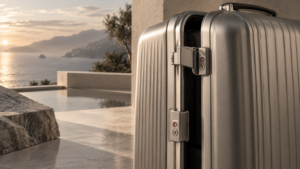
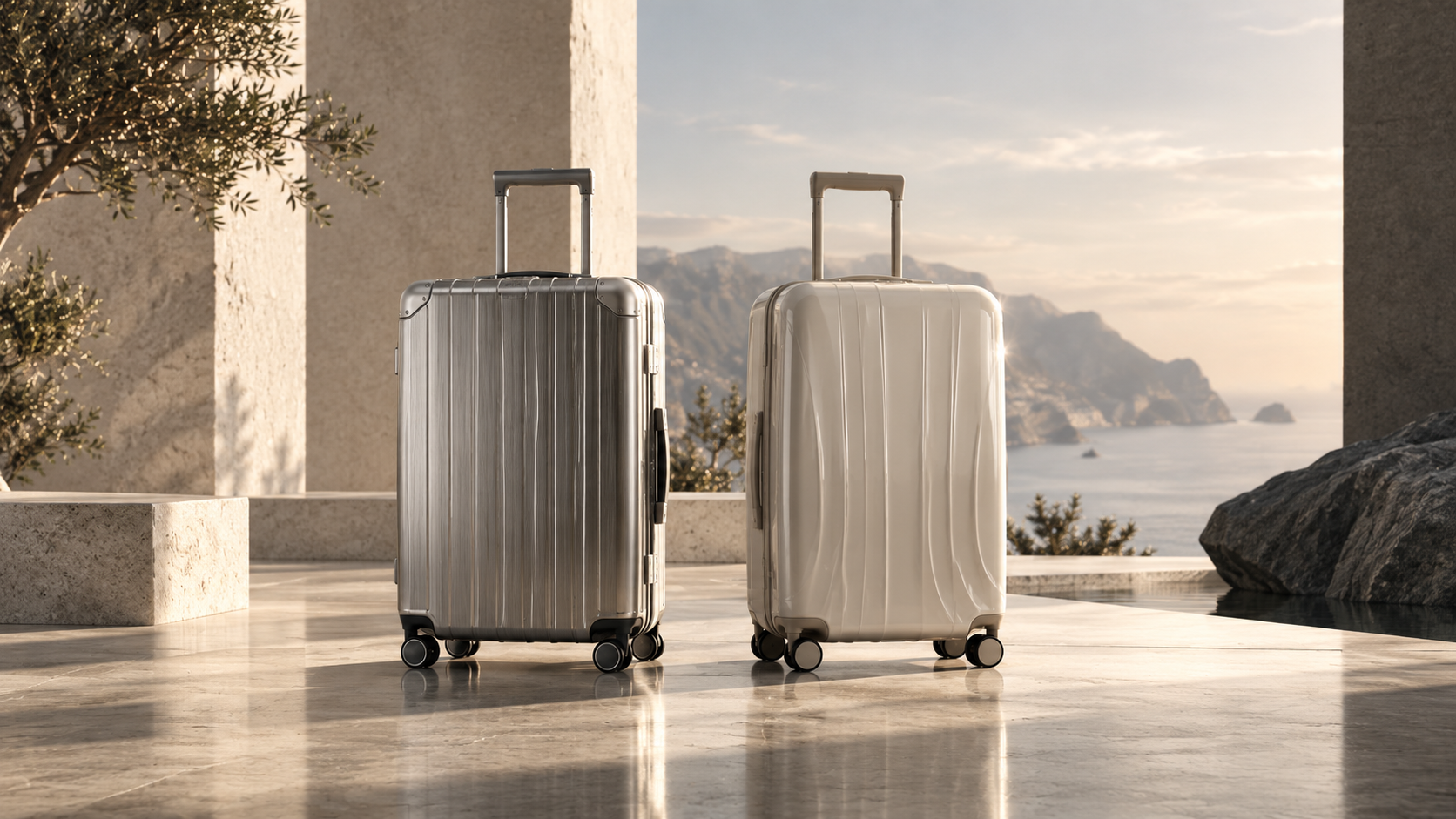
Choosing between aluminum and polycarbonate luggage is not simply a question of which material is stronger. The two materials behave differently, feel different in use and suit different types of travelers.
Aluminum luggage is typically chosen for its rigid construction, structured appearance and premium feel. Polycarbonate luggage is valued for its lighter weight, flexibility and ability to absorb impact by flexing rather than remaining completely rigid.
Neither material is universally better. The right choice depends on how you travel, how much weight matters to you and what you expect from your suitcase over time.
Aluminum vs Polycarbonate Luggage at a Glance
The biggest difference is how each material responds to force.
Aluminum is rigid. When it receives a strong impact, the shell may dent or mark rather than flex significantly.
Polycarbonate is more flexible. It can bend slightly under pressure and then return toward its original shape.
That difference affects durability, appearance, weight and the overall travel experience.
| Factor | Aluminum Luggage | Polycarbonate Luggage |
|---|---|---|
| Structure | Very rigid | Flexible hard shell |
| Weight | Generally heavier | Generally lighter |
| Impact behavior | Can dent or mark | Can flex and recover |
| Appearance | Metallic, structured | Smooth or textured shell |
| Security | Often frame-based | Commonly zipper or frame-based |
| Travel feel | Substantial and engineered | Lightweight and practical |
Is Aluminum Luggage More Durable?
Aluminum luggage can provide a highly rigid structure, particularly when the case uses a reinforced frame construction.
The shell does not flex significantly, giving the suitcase a solid and structured feel. This can appeal to travelers who prefer their belongings to sit within a rigid outer case.
However, aluminum should not be confused with being immune to cosmetic wear.
A metal suitcase can develop dents, scratches and surface marks during baggage handling. For many owners, those marks become part of the character of the case. For others, keeping a suitcase visually pristine may be important.
Polycarbonate behaves differently.
Instead of remaining completely rigid under impact, polycarbonate can flex under pressure. This flexibility can help the shell manage bumps and compression during transit.
So the durability question is really about how you want the suitcase to handle impact.
Aluminum tends to resist through rigidity. Polycarbonate tends to manage impact through controlled flexibility.
Which Material Is Lighter?
Polycarbonate generally has the advantage when luggage weight is a priority.
Because aluminum shells and frame systems can add mass, aluminum luggage often feels more substantial before anything is packed inside.
This matters particularly when airline baggage allowances are strict.
A lighter suitcase leaves more of the airline’s weight allowance available for clothing, footwear and other belongings.
For cabin travel, where every kilogram can matter, some travelers may therefore prefer a polycarbonate carry-on.
If structure, feel and rigidity matter more than minimum weight, aluminum may still be the preferred choice.
For travelers comparing formats, the RAVONA Size Guide can help determine whether a cabin, check-in or trunk format better suits the journey.
Which Offers Better Protection?
Both materials can provide strong protection, but they do it differently.
An aluminum suitcase creates a rigid outer enclosure that resists flexing under normal pressure and provides a highly structured feel.
Polycarbonate combines a hard outer shell with controlled flexibility. Under pressure, the shell can flex rather than behaving like a completely rigid surface.
The actual protection offered by any suitcase also depends on more than its shell material.
- Frame construction
- Corner reinforcement
- Wheel mounting
- Internal dividers
- Packing technique
- Closure system
- Overall build quality
Material alone should therefore never be the only factor when evaluating luggage.
Aluminum Luggage and Security
Many aluminum suitcases use frame-style or zipperless closures.
Rather than relying on a long fabric zipper around the perimeter of the case, the two shell halves meet through a structured frame and are secured using integrated locks or latches.
This is one reason some travelers specifically seek zipperless aluminum luggage.
A rigid frame can also contribute to the engineered feel associated with aluminum suitcases.
Explore the RAVONA Aluminum Luggage Collection to compare current aluminum formats.
What Are the Advantages of Polycarbonate Luggage?
Polycarbonate luggage is popular because it combines a hard exterior with relatively low weight and useful flexibility.
Lower Weight
For travelers who frequently fly with strict baggage limits, a lighter shell can be valuable.
Impact Flexibility
Polycarbonate can flex when subjected to force, helping the shell absorb impacts during handling.
Practical Everyday Use
For frequent short trips, family travel or journeys where lower weight and easier handling are priorities, polycarbonate can be a practical choice.
Different Design Possibilities
Polycarbonate shells can be formed into a wide range of shapes, textures and colors.
What Are the Advantages of Aluminum Luggage?
Rigid Construction
The shell and frame create a highly structured case.
Premium Material Feel
Metal provides a tactile and visual character that is difficult to reproduce with molded polymer luggage.
Frame-Based Designs
Many aluminum cases use zipperless frame construction, which contributes to both appearance and functionality.
Long-Term Character
Scratches and small marks can become part of the suitcase’s appearance rather than necessarily making the case feel worn out.
For travelers who value design, precision and a substantial feel, these characteristics can outweigh the additional weight.
Does Aluminum Luggage Dent Easily?
Aluminum can dent when exposed to significant impact.
That is not necessarily evidence that the suitcase has failed. A dent does not necessarily mean that the suitcase has lost its structural function, although any significant damage should still be inspected.
Travelers who prefer a suitcase to retain a smoother appearance may find polycarbonate easier to live with because the shell can recover from some impacts without retaining the same type of visible dent.
Both materials will show wear over time. They simply show it differently.
Is Polycarbonate Luggage Easy to Crack?
Polycarbonate is widely used in hard-shell luggage because it combines structural strength with useful flexibility.
Unlike more brittle plastics, polycarbonate can flex under stress and may return toward its original shape once that pressure is removed.
That flexibility is one of the reasons it is widely used for hard-shell luggage.
Strong impacts and poor overall construction can still cause damage, so the complete suitcase design matters as much as the material used for the shell.
Aluminum vs Polycarbonate for Carry-On Luggage
For carry-on travel, the choice often comes down to weight versus structure.
Choose aluminum if you prefer:
- A rigid frame
- A substantial premium feel
- Zipperless construction
- A distinctive metallic appearance
Choose polycarbonate if you prefer:
- Lower suitcase weight
- Flexible impact resistance
- Easier handling
- A lighter everyday travel experience
Compare current formats in the RAVONA Carry-On & Cabin Luggage Collection.
Aluminum vs Polycarbonate for Check-In Luggage
The priorities can change when the suitcase is checked.
Checked luggage experiences conveyor systems, baggage stacking and more frequent handling outside the traveler’s control.
An aluminum case provides excellent rigidity, but visible dents and marks are a realistic part of using metal luggage.
Polycarbonate can offer a useful balance for checked travel because its shell remains comparatively lightweight while retaining some flexibility under pressure.
Travelers planning longer journeys can explore the RAVONA Check-In Luggage Collection.
Which Material Looks More Premium?
Appearance is subjective, but aluminum is often associated with a more architectural and industrial aesthetic.
Its metallic surface, frame construction and hardware often create a more engineered appearance.
Polycarbonate can also feel premium when its proportions, finishes, hardware and detailing are carefully considered. Its visual character is simply different: lighter and smoother rather than overtly structural.
At RAVONA, both materials represent different approaches to the same objective: luggage designed around modern movement.
Which One Should You Choose?
Choose aluminum luggage if your priorities are:
- Rigid construction
- Structured frame design
- Metallic aesthetics
- A substantial premium feel
- Zipperless closure options
Choose polycarbonate luggage if your priorities are:
- Lighter weight
- Shell flexibility
- Easy everyday handling
- Impact absorption
- Practical air travel
If neither set of priorities completely describes your needs, a mixed-material approach may also be worth considering. Explore the RAVONA Hybrid Luggage Collection.
Final Thoughts
The choice between aluminum and polycarbonate luggage is ultimately a choice between two different material philosophies.
Aluminum emphasizes rigidity, structure and permanence.
Polycarbonate emphasizes flexibility, lower weight and adaptability.
A traveler who values the tactile feel and architecture of a metal case may prefer aluminum even if it weighs more and develops visible marks over time.
A traveler who prioritizes lighter handling and impact flexibility may find polycarbonate better suited to frequent flying.
The best suitcase is therefore not simply the one made from the strongest material. It is the one whose construction, weight, format and design best match the way you travel.